
A Conversation with Ken Harper, Class of 1948
by Larry Humes, Class of 1965
March 22, 2016
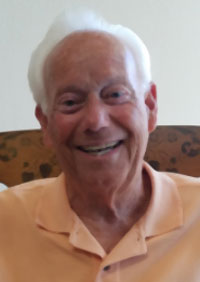 Kenneth Franklin Harper Kenneth Franklin HarperJanuary 15, 1931 – November 21, 2025 U.S. Senator Mitch McConnell @SenMcConnell I was deeply saddened to learn of the passing of former State Representative Ken Harper. Ken attended the Kentucky Military Institute and served our country dutifully in the United States Air Force during the Korean War. He devoted much of his career to the people of the Commonwealth serving 9 terms in the state house and eventually becoming Secretary of State. Ken was actively involved in the Northern Kentucky community through his more than 70 years of membership in the Covington Rotary Club, and his service on countless boards and committees of local organizations. His work on legislation that helped create Northern Kentucky University leaves a legacy that will benefit many generations to come. I was proud to know Ken, and am grateful for his lifetime of devotion to Kentucky. Elaine and I are thinking of his entire family and friends during this difficult time. |
Born in Covington, Kentucky in 1931, Ken Harper has lived most of his life in the Bluegrass State. On March 22, 2016, Larry R. Humes interviewed Mr. Harper about his life in Kentucky, his service as a legislator and as Secretary of State, and as a cadet at Kentucky Military Institute (KMI). LH: Okay. Today is March 22, 2016, my name is Larry Humes and I am having a conversation with Ken Harper, who is a retired businessman, politician and a graduate of Kentucky Military Institute. Ken, thank you so much for agreeing to sit down for this interview. KH: Happy to do it. And happy to be here in Venice. LH: So maybe a good place to start is where and when were you born, a little bit about your earliest days. KH: I was born in Covington, Kentucky in January 1931. Eighty-five years ago. LH: Tell me about your mom and dad. KH: Well, it was depression times. Very, very difficult for them. In fact, just after I was born, dad lost his job on the railroad so we moved in with my grandfather and grandmother. They were railroaders; the family had always been railroaders. LH: What railroad did they work for? KH: Well, it depends. They were on the L&N (Louisville & Nashville) Railway then. They had the DeCoursey Yards there (Covington). My grandfather was a brakeman and my dad’s brother, he was an engineer on the railroad. He ended up with CSX and was the engineer on the George Washington (Cincinnati to D.C.) run. They were railroaders, but dad didn’t have a job. He was the youngest of six. We lived a block away from the old Latonia Racetrack. He’d exercise horses in the morning, sell shoes and insurance in the afternoon and evenings and so on. He picked up all kinds of odd jobs. There was no way he was going to go on the dole or anything like that. As they say today, it just wasn’t in our DNA. My grandparents eventually died and we had to move out of that house and into a little tenant farmhouse. And after that, he got a job parking cars in a garage over in Cincinnati. LH: Did you have any brothers or sisters? KH: I had a sister, but she passed away before I was one year old. Spinal meningitis. At that time, there was no way to cure her. She was only two. It was just one of those things. LH: Tell me about growing up in Covington and Cincinnati. What was it like in those days? KH: Well, Cincinnati was a bridge apart (from Covington). The suspension bridge was the main bridge over to Cincinnati at that time. It was an interesting time. I went to elementary school close by. My parents, even though they didn’t have a lot of finances, they were still community minded. Dad was a scoutmaster and I was, in fact, the first Cub Scout in our county. Mom and dad formed the first Cub pack in our elementary school. She was the den mother as they called them, that sort of thing. But they did everything. Politically, they would go out and support certain candidates, the door-to-door passing out cards, that sort of thing. When the (World War II) war came, dad got a job with what was called then Wright Aeronautical, which is now General Electric Jet Engines. And mom, soon after, got a job there. They worked the second shift, both of them. Dad was a foreman, a supervisor over the machine tools they used to make the engines. So that’s kind of how I got into the KMI thing. I sold magazines prior to that time, which kind of shows you how our family was. If you made a commitment, you kept your commitment. One summer day, some guy comes around in an automobile and sees all these kids playing in the street and he pulls over, opens the trunk of his car and pulls out these Saturday Evening Post magazines. Well, I was nine years old, you know. He shows us these pictures of bicycles and if you sold so many magazines, you get so many coupons. And once you get enough coupons, you get this bicycle. I wanted a bicycle in the worst way so I said, yeah, I’m going to do that. Well, I took that into the house to my dad and mom. My dad lit me up; he was upset that I would do something like that, but then he sat me down and said: You’ve made a commitment. You’re going to keep it. From that time on, up until the time that we moved from that particular home, I sold magazines. I got the bicycle (smiles)! I made my route pretty big around what was called Latonia and Rosedale. Had a ball doing it. Had a lot of good customers and got to communicate with people that way. But when the war started, and they were at Wright, I’d come home from school, do my studies, go out and have a little play time, that sort of thing as a kid. Of course, that was back in the 40’s. And they weren’t home. I was there by myself. I’d get the supper out of the oven. They’d come in about midnight or so. Mom and dad, they were very education conscious. I was going to Holmes Junior High at the time. One day, I came home and dad had this (KMI) catalog. He handed it to me and said “would you like to go here?” Let me back up here just a bit. He’d never made a lot of money until he got to Wright’s. Now, he was making some money. Number one, he felt I didn’t need to be home by myself if we could possibly avoid it. Number two, I needed a good education and he wasn’t completely satisfied with the education I was getting locally. So he handed me this catalog and I looked through it, don’t you know, and of course, when you see those pictures of Venice (laughs). As you well know, that certainly attracts the attention. He said, “if you want to go, we’ll send you.” LH: So what year (at KMI) was your first year? KH: I started in the fall of 1944. LH: And you were in the 9th grade? KH: Ninth grade, yes. LH: Did they have junior high then? KH: They offered junior high grades at that time, yes. In fact, they had the junior school the whole time I was there. So, my first year in Venice would have been in January of 1945. I was 14 at the time. LH: What were your initial impressions of KMI? KH: Well, here’s a guy from home, had not had a lot of communication with people other than my neighborhood friends. That was about it. So it was kind of a frightening experience at first. It was something brand new; I’d never been away from home before except to go to my grandparents’ house up in Indiana. I came down there, I was a scrawny little kid. It was really interesting to see all this discipline although my parents were very good in that way. I was expecting it, but still, all these new guys from all over the country. So many new experiences. Meeting Sergeant G for the first time. He was the sergeant who really drilled us, you know, and taught us how to clean rifles and so on. Dad always said they sent me down there to straighten me out. Not because of my attitude or anything like that, quite to the contrary. But I was always a little hunched over, don’t you know. They did straighten me out. In fact, some of the pictures I have of me, at the first homecoming and then later on, you could see the difference in my posture. We were talking about the rifles. When I was first down there, we had the old Enfield rifles, the bolt action 03 models. I think the second year I was there, we got the M-1’s. I will never forget, when they brought all of those in, our task was to get all that Cosmoline off those rifles they were packed in. That was quite a job. We got a great experience there (KMI). It was a great thing. When you start something like that, and all of a sudden you are told you’re a rat (first-year student) and this is what you are going to do for the upperclassmen: pick up their laundry and take it to the depot , clean the latrines and so on, it was quite an experience. But it was a good experience. It really taught me a lot and helped me be able to express myself with others. It was an experience for a kid like me who had never been anywhere. LH: Tell me about your experience of coming to Venice. This would have been early in 1945. You’d never been to Florida before, right? KH: That’s right. It was something else. At that time, there were two parts of the train: one started in Cincinnati, at the old Union Terminal. The other one started in Corbin, Kentucky. We’d go over and get on the train in Cincinnati, then those two parts of the train formed up in Corbin and we came on down. When we got here (Venice), they had trucks here and we loaded our baggage on the trucks. Then, they marched us in formation from the train over to the school, because the Intracoastal wasn’t here. It was just a road and they marched us over, in formation, to the school. In fact, I don’t know what they called it during your time, but we called it “extended order drill.” That’s where we went out and “played soldier.” And we’d go over there (gestures toward area northeast of old Train Depot, currently location of Legacy Park). What they did with all those palmettos, we’d go flying through there with our squad leader or platoon leader in front of us and that sort of thing. We’d do maneuvers over in this particular area. In fact, there’s one funny story I can relate to that area. One year, our platoon leader, a fellow by the name of Charley Jennings, we were in single file dashing through the palmettos. He jumped over a log that was in our path and, as he jumped over, he looked down and there was a big rattlesnake sunning itself right there on the other side of the log. Well, he was very quick thinking. He hit the rattlesnake with the butt of his rifle and killed it. He took it back to the school to the cooks. And the cooks, they had a feast. Those are some of the things you remember. LH: What was Venice like then? KH: Venice was very sparsely settled as you see in some of those pictures. In fact, that whole block (along Venice Avenue) between Nassau and Nokomis, that wasn’t completed when we were here. Where the pub (TJ Carneys) is now, that was a drugstore. We spent a lot of time there. LH: They called (cadets) drugstore cowboys. KH: That’s about the size of it. There were spaces in-between the buildings. In fact, my last year here, they built a bowling alley. On Saturdays, I’d go over to the bowling alley and set pins. It was on Venice Avenue, about where the ice cream store is today. I’d set pins on Saturdays to earn a little extra money. Parents were required to send us at least two dollars per week; that was our spending money during the time that we were there. But if we could earn a little additional, we could keep that. You know, coming down here and going to that beach for the first time, what an experience! Venice Air Base was still in operation then. We could watch the P-51s and P-40s fly over the Gulf there and do target practice down at the end. Every once and while, we could pick up some shells as we wandered around town on our free time. Of course, the big thing then, as it is now, was to go and find the shark’s teeth. LH: Much of the beach really wasn’t developed at that time, was it? KH: No, right at the end of Venice Avenue, that was a nice beach. We’d go up to the jetties, too, and fish off the jetties. When we were here, things weren’t developed like when you were here. There wasn’t a lot of boating. We could rent a boat if we had enough money. We would go up to Shakett Creek and they had a couple boat rental places there. They were almost the size of canoes, but they had motors on them. We’d go out and putter around and try to catch some fish. I guess that would have been the Roberts Bay area. LH: You used to have the full-dress parades every other weekend? KH: Oh yeah. We looked forward to those. I played clarinet so I was in Band Ccompany. In fact, I was the first clarinetist for a couple years. You’ll see some pictures where the band is fully formed, but there’s one extra guy it seems like. I was that one extra guy at the back of the formation. But we did it every other weekend, all spit and polish. It was a good thing for Venice and it was a good thing for us. LH: Were your parents ever able to come down and visit you while you were in Venice? KH: No, they never got to see it at all. One of the funny things, when I told you the airbase was still in operation here, it didn’t go out of operation until after we had graduated. I had a good friend up home, he’s passed away now, but he was president of our local bank. Oddly enough, he was from Tennessee, but he went to UC (University of Cincinnati) and he graduated as an engineer. He went into the Army Air Corps and, believe it or not, he was a P-51 pilot trained here in Venice. I was having coffee with him one morning in Covington, because I was on his board of directors, and we got to talking. I don’t know how we got on the subject, but I mentioned that I had attended KMI in Venice. He looked at me and said: “Ken, I hated you little ‘bleepers’ “ I asked why and he replied: “Whenever we’d go into Venice, all I was doing was saluting all of you cadets. We almost hated to go into downtown Venice because of that. You guys were all over the place.” We laughed about that quite a bit. I don’t know that he was here the year that I was, but was probably the year before. They closed the airbase after my first year here. A couple years later, I had a buddy by the name of Eddie Jackson, who was from Taswell, Virginia. Even though he was a sophomore in high school, he had a pilot’s license. His dad was a doctor and he had acquired his pilot’s license because they flew all over Virginia as a doctor. So he and I would go out to the Venice Airport and we’d rent a PT-19. We’d pool our money and we’d rent a PT-19 – that was an open-cockpit trainer – and we’d fly all over the Venice area. We’d rent it for an hour. He’d fly it and I’d just ride along in the back seat and enjoy the view. LH: Now was that the Venice Airport? I understand there was a grass strip where the Intracoastal is today, behind the present elementary and high school. KH: Yes, that was the grass strip. After I’d seen the (current) Venice Airport, I couldn’t quite get the position. But you are right, it was the grass strip we flew out of. LH: It was called the Albee Municipal Airport and there was a guy from about your time at KMI, Herb Havens, who used to take flying lessons from there. KH: That was an interesting thing for a guy like me, coming from the background I had. This was just something else. I fell in love with Venice, I really did. Of course, Venice was so sparely populated at that time, when we would walk to the jetties, sometimes we would walk back through all those palmettos and orange groves, you could almost see how the town was laid out. A lot of the street lines had been graded out, but there were no curbs or things like that. It was all abandoned field when we were here, because they had never gotten to do the development. LH: So you graduated in 1948? What did you do after graduation? KH: I almost didn’t make it for my senior year because Wright Aeronautical was closing down. The war was over so they were letting all of those people out. So mom and dad had to go find new jobs. He had saved enough money to get me down to my last year. It was touch and go. The tuition was $1,365 my final year. That was a lot of money for them. He opened up a gas station and was able to get through at that time, also sold stationery and so on. He was bound and determined I was going to finish. When I graduated, there was no money for college, so I went to work for the Ford Motor Company district office in Cincinnati as a mail clerk. I earned enough money that fall of 48 and spring of 49 and was able to start UK (University of Kentucky) with the money I earned in the fall of 49. That lasted me until the end of that first year, 1950. I had no more money, and they didn’t have enough money, to send me to college. At that time, UK had a community college so I went to the community college for a semester. There are a lot of stories after that. One thing I failed to mention earlier, when we were talking about KMI, in 1947 or 46, they had a lot of polio around the country at that time. When we left here (Venice) for spring vacation back in Kentucky, and I arrived back on campus in Lyndon, we were all put on quarantine. One of the cadets, while he was home for spring vacation, contracted polio. He lived in Cincinnati. His name was Chuck Nutting and he never came back to school. I think this was in 46. So we were quarantined for six weeks up there. When we were here (Venice), I also remember we took the band to Fort Myers for the Edison Light Parade. I think this was the first time that they had the Edison parade after the war. They had suspended it during the war years. We marched in that parade. And we also marched up in Sarasota at the Gasparilla Pageant and that sort of thing. We had a lot of good times when we would go out of town on those parades. LH: So during those years following KMI, you attended community college and … KH: Went to community college and was working at the same time. That was 1950. Eileen (spouse, who was present for this interview) and I were going together at that time. I met her in 48 and she hung in there all that time. I have to tell this story; she’s going to kill me. I gave her a ring at Christmas 1950. That’s when I was going to community college. After Christmas, I went back to school and was sitting in economics class when a friend of mine came in. He said: “Ken, guess what just happened to me? I just got my draft papers to go to Korea.” I said, “Uh-oh, you’re five days older than I am. I’ll bet I’m going to get mine.” With that, as soon as class was over, a whole group of us from class, we marched out to the Air Force recruiting station, which was a block away. We all joined the Air Force, one of the largest recruiting classes they had ever had. This was three weeks after I had given her the ring. So I always say that I gave her the ring and three weeks later, got out of town (laughs). I went to Korea in 1951. I was in ground communications and, in fact, I was with the administration group. We were stationed north of Seoul, up near the 38th Parallel. It’s where all the action was at the time. I was there until the fall of 52 and was sent back to Shaw Air Base in South Carolina. We got married while I was down at Shaw. LH: So you separated from the Air Force? KH: I separated from the Air Force just a few months before my tour was up . They had what they called ‘early outs’ because they were running low on budget and that sort of thing. I took the opportunity and, at that time, dad had a small business up in Covington and invited me to work for him, so I did. Went to work for Dad. Believe it or not, it was a collection business. I was repo man at that time (smiles). LH: Did you go back to school at that time? KH: Never went back. We had one child at the time. We ended up with five kids, four sons and a daughter. Community work was something mom and dad always did. He was a Kiwanian and wanted me to get into the Rotary Club, which I did. Also got into the Jaycees and various community things like that. That led to the political thing and I became a state representative, the first Republican legislator elected in my county in 43 years. The last one had occurred in 1920. LH: What year was this that you were elected? KH: 1963. I was in state politics, one way or another, from that time until I retired from the Legislature in 1995. In between, we had a Republican governor. We don’t have many Republican governors in Kentucky. Governor (Louie) Nunn was elected and he brought me into his administration as Commissioner of Public Information for the state. Then, our Secretary of State passed away and the governor appointed me to fill out the remaining term as Secretary of State. That was in 1971. When I got out of that, I went into the real estate business with a friend of mine and was in that for a while. An opportunity, a friend of mine who was holding the seat that I had held before, was appointed by President Reagan as a district attorney for the eastern district of Kentucky. He asked me if I was going to run for his seat and I said yeah. So I ran again, went back into the Legislature, that was in 81, and then left the Legislature in 95. During that period of time, I became president of the National Republican Legislator’s Association, I was chairman of our Republican caucus in the Kentucky House, and had the privilege of speaking at the 1992 National Conventionin Houston. LH: Really? That’s quite an honor. KH: It was a rewarding career, but something I had never intended to get involved in, politics. I didn’t know anything about it, but I went out and knocked on doors and that’s the history of it. LH: Well, that was back in the day when politics was considered public service. KH: That’s exactly right. You didn’t earn any money then. But that (career) all was a result of my community service. I got well known in the community and, because of that, when I ran my first race, I was able to win against an incumbent. Again, it was against a Democrat. In fact, they told me when I registered to vote, that I couldn’t register as a Republican. When I asked why not, they said because we don’t have a Republican primary. We don’t have any Republicans here. And I replied: “Well, you have one now.” LH: So how long have you two been wintering in Florida? KH: We started coming down in 2000 so it’s been 16 years now. Always on the west coast. We love it down here. LH: Anything we haven’t talked about? KH: I’m trying to think back. You know, Venice, there wasn’t much going on in Venice when we were down here, even when we left. Especially after the air base shut down. KMI was about the only thing going on then. LH: Even in my time, the early 1960s, Venice wasn’t the city it is today. There were concrete homes. The city was populated by people with modest incomes. It was a place for the average middle income person to retire. It wasn’t exclusive million dollar estates, that sort of thing. It just wasn’t that way. KH: Eileen’s uncle lived down here in the 1960s. He lived over on Gulf Drive. You could walk from his house almost onto the beach. LH: You told me an interesting story, that you had an uncle who was a member of the Brotherhood of Locomotive Engineers. KH: That was my uncle and my grandfather. You know, they all belonged to the union. I don’t remember him though, because he died just before my first birthday. |